Start with monthly cost, not the listing price
Most buyers start their search with a price filter. I'd start with a different question: What total monthly payment can you live with comfortably, with room left for life?
Build that number first. Then work backward with your lender to determine a realistic price range. That order helps keep you from falling in love with a home that fits your price filter but not your monthly budget.
Your full monthly number usually includes:
- Principal and interest on your loan
- Property taxes
- Homeowners insurance
- HOA dues, if the home has them
- Mortgage insurance, if applicable, particularly on conventional loans with less than 20% down
- A realistic amount set aside for maintenance and unexpected repairs
The goal isn't simply to qualify for a mortgage. It's to feel comfortable with the responsibilities that come after you receive the keys.
What current Simi Valley pricing looks like
For context,
Realtor.com's September 2026 data put Simi Valley's median sold price at
$810,000, with
432 active listings and a median of
46 days on market.
Meanwhile,
Zillow's typical home value for Simi Valley was
$829,804 as of September 30, 2026, reflecting a 0.2% increase over the previous year.
These figures measure different things.
Realtor.com's median sold price reflects recent home sales, while Zillow's typical home value is an estimate of local housing values. Both offer useful context, but neither replaces a property-specific comparison of recent sales.
Two things stand out for buyers.
First, there are options worth comparing across different price ranges and neighborhoods.
Realtor.com characterized Simi Valley as a balanced market in September 2026, suggesting that buyers and sellers had relatively similar negotiating power overall.
Second, a well-priced, well-kept home can still move quickly. Having more options doesn't necessarily mean the right one will wait.
The best approach is to understand what comparable homes have actually sold for and evaluate each property on its own merits.
Mortgage rates and why your personal quote matters
According to
Freddie Mac's Primary Mortgage Market Survey, the national average 30-year fixed mortgage rate was
7.32% as of October 22, 2026, down from 7.40% the previous week.
This is a national weekly average focused on conventional home purchase loans for borrowers with excellent credit and 20% down. It's useful context, not a personalized mortgage quote.
Your actual rate depends on your credit, down payment, loan type, and the lender you choose.
Small differences can add up. On a $650,000 loan with a 30-year fixed term, a quarter-point difference in the interest rate can change your principal and interest payment by roughly $100 to $115 per month, depending on the starting rate. That's more than $1,200 a year.
That's why I encourage buyers to get Loan Estimates from at least two lenders.
Compare the interest rate, lender fees, any discount points, and the overall loan structure side by side. The lowest advertised rate isn't always the lowest total cost.
Taking time to understand those differences before committing can make a meaningful impact on your long-term budget.
Property taxes, HOA dues and insurance
Property taxes
In California, Proposition 13 sets the base property tax rate at 1% of a home's assessed value. When you purchase a property, its assessed value generally resets based on the purchase price.
Many Simi Valley properties also carry additional voter-approved taxes, assessments, or special district charges beyond that base rate.
Ask for the property's current tax bill and work with your lender to estimate what your taxes could look like after your purchase.
One surprise worth preparing for is a supplemental property tax bill.
After closing, Ventura County may issue a supplemental assessment reflecting the difference between the previous assessed value and the property's newly established value. Depending on the timing, you may receive a separate bill that isn't included in your regular mortgage escrow payments.
Understanding this early helps avoid unexpected expenses during your first year of ownership.
HOA dues
If a home belongs to a homeowners association, ask what the monthly dues cover and whether they may change.
Look at the association's financial health, reserve funding, maintenance responsibilities, and any planned special assessments.
Some communities include amenities or exterior maintenance services in their dues, while others place more responsibility on individual homeowners.
Review the HOA documents carefully during your due diligence period, not after.
Homeowners insurance
If you're financing your home purchase, your lender will generally require proof of homeowners insurance before closing.
In Southern California, insurance availability and pricing can vary considerably from one property to another. Location, construction materials, roof condition, and wildfire exposure can all influence your coverage options.
Start requesting quotes early, ideally before removing your insurance-related contingencies.
A licensed insurance agent or broker can help you evaluate available policies, coverage limits, deductibles, and the estimated cost for that specific address.
Don't assume the insurance premium from an online mortgage calculator reflects what you'll actually pay.
Wildfire and home-hardening questions
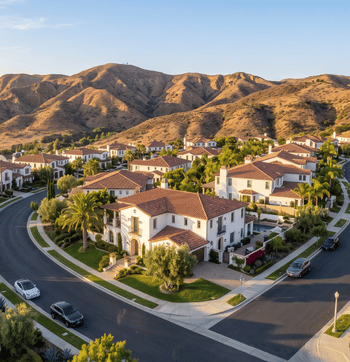
Simi Valley sits among beautiful hills, and some neighborhoods back right up to open space.
That's part of what people love about the area. It also means wildfire preparedness deserves attention during the homebuying process.
Your Natural Hazard Disclosure report can help identify whether a property falls within a designated fire hazard severity zone.
Beyond that, ask:
- How old is the roof, and what materials were used?
- Are the attic and foundation vents designed to resist ember intrusion?
- What does the defensible space around the home look like?
- Has the seller completed any fire-hardening improvements?
- Are there records of upgrades, inspections, or mitigation work?
California's
Safer from Wildfires framework outlines steps homeowners can take to reduce wildfire risks, including improvements to roofs, vents, surrounding vegetation, and other vulnerable areas.
Some participating insurers recognize qualifying mitigation measures when determining premiums or discounts.
However, don't assume a particular upgrade guarantees coverage or a lower premium. Ask your insurance professional to confirm any potential benefit for the specific property.
The
California Department of Insurance and
CAL FIRE provide additional resources to help California homeowners understand wildfire risks and preparedness.
Inspections and property-specific due diligence
A general home inspection is the starting point, not the finish line.
Every home has its own history, and some concerns aren't immediately visible during a walkthrough.
Depending on the property's age, condition, and features, I often recommend considering:
- Sewer line camera inspection: Especially useful for older homes where underground plumbing conditions may be uncertain.
- Roof inspection: Worth considering when the roof is aging, has visible wear, or has an unclear maintenance history.
- Wood-destroying pest inspection: Helps identify termite activity, damage, or conditions that may encourage future problems.
- HVAC inspection: Particularly helpful for older heating and cooling systems.
- Permit history review: Check with the City of Simi Valley regarding additions, garage conversions, accessory dwelling units (ADUs), or other significant modifications.
An inspection doesn't automatically mean something is wrong. It gives you more information about the property you're considering.
Use your contractual contingency period carefully. This is your opportunity to investigate concerns, ask questions, consult qualified professionals, and understand the property's condition before proceeding with the purchase.
Comparing neighborhoods without reducing them to stereotypes
Every Simi Valley neighborhood has its own character, and the right one depends on how you live.
Instead of asking whether an area is "good," compare the practical details that matter to your household.
Consider:
- Your commute and access to the 118 or 23 freeways
- Nearby parks, trails, and open spaces
- Lot sizes, home ages, and architectural styles
- Whether the property belongs to an HOA
- Proximity to shopping, dining, services, and daily errands
Local conveniences continue to evolve, too.
For example,
Whole Foods Market announced that its new Simi Valley location at
2631 Tapo Canyon Road is scheduled to open on
November 10, 2026, adding another grocery shopping option for area residents.
But convenience isn't only about what's nearby on a map.
Visit neighborhoods at different times of day. Drive your prospective commute during rush hour. Walk the street on a weekend and see how the surroundings feel.
If schools are important to your decision, consult official district resources directly and verify attendance boundaries for the specific address.
The goal is to find a location that supports your everyday routine, not simply one that looks appealing in a listing.
Questions to ask before writing an offer
Before making an offer on a Simi Valley home, ask yourself:
- What's my full monthly cost for this specific home, beyond the mortgage payment shown on the listing?
- What does the current property tax bill show, and are there additional assessments?
- Have I obtained an insurance quote for this address?
- What have comparable homes nearby actually sold for?
- What inspections would be appropriate given the property's age, condition, and features?
- Are there HOA dues or planned special assessments I need to understand?
- How much cash will I have left after the down payment, closing costs, and moving expenses?
These questions aren't meant to slow down your home search.
They're meant to help you make decisions with greater confidence before committing to a property.
FAQs
How much cash should I keep beyond the down payment?
Plan for closing costs, moving expenses, and a financial cushion for your first few months of ownership.
Your lender can provide an estimate of closing costs through your Loan Estimate.
Beyond that, keeping several months of housing expenses in reserve can provide flexibility if an unexpected repair or other expense comes up.
The amount that's appropriate for you depends on your income, savings, and overall financial situation.
Do I need homeowners insurance before closing?
If you're financing your purchase, your lender will generally require proof of homeowners insurance before closing.
Start requesting quotes early so you can confirm that suitable coverage is available for the property and understand the premium before moving forward.
Cash buyers should also carefully evaluate insurance coverage, even when a lender isn't requiring it.
What should I know about wildfire exposure?
Review the property's Natural Hazard Disclosure report and ask about the roof, vents, defensible space, and any completed home-hardening improvements.
Speak with a licensed insurance professional about coverage options for the exact address.
Wildfire exposure and insurability can vary significantly between properties, even within the same community.
How do HOA dues affect affordability?
Lenders generally consider HOA dues when calculating your monthly housing obligations.
Higher dues may affect the amount you're qualified to borrow, so review them alongside your mortgage payment, taxes, and insurance.
Also consider what the dues cover and whether additional assessments may be necessary.
Should I shop multiple lenders?
Yes.
Comparing Loan Estimates from at least two lenders can help you identify differences in interest rates, fees, discount points, and loan terms.
Even modest differences may lead to meaningful savings over the life of your mortgage.
Know the full picture first
Buying a home is a major decision, but the financial side doesn't have to feel overwhelming.
Start by building the complete monthly-cost picture before deciding what purchase price feels comfortable.
Once you understand your real number, you can spend more time finding a home that fits your lifestyle and less time worrying about unexpected expenses.
After more than 20 years helping families buy homes throughout Simi Valley and the Conejo Valley, I'm happy to help you work through those considerations before you ever step into an open house.
Talk with Debbie, call or text
(805) 428-1100, or start with our
Buyers Guide.
You can also explore
Simi Valley neighborhoods and visit our
real estate blog for additional homebuying and selling guidance.
The right home isn't just about finding a price that works today. It's about choosing a place and a monthly commitment that continue to make sense long after moving day.
Sources
Market figures reflect their stated reporting periods and may change as new data becomes available. Financial, tax, lending, inspection, and insurance details should be confirmed with appropriately licensed professionals.
Debbie Gates, REALTOR® · DRE #01458529 · eXp Realty of Greater Los Angeles Inc. · CA DRE #02188471 · Equal Housing Opportunity